How an 11-Year-Old Used AI to Design Her K-Pop Demon Hunters Birthday Costume
By Aastha Agarwal, lead designer at Pink Blue India
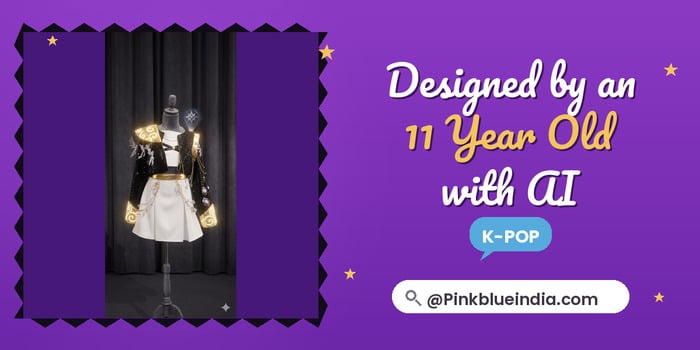
I have been designing children’s clothes for 23 years. In that time my team and I have made more than 50,000 outfits, and I honestly thought I had met every kind of customer there is. Then a girl from Bangalore proved me wrong.
She was 11.
Let me back up a little, because the way she reached us tells you a lot about how this whole work is changing.
For most of my career a custom order began with a phone call and a description. A mother would tell us what she pictured for her child, and our designers would sit and sketch it from nothing. The sketch was the moment the idea finally became something you could see. That was where the real work started.
Now it often starts with a picture. And more and more, that picture is made by AI.
The brief is a picture now, not a sentence
These days a lot of customers don’t describe the outfit to us at all. They open an AI tool, type in what they want, and send us a finished image. I’ll be honest, the first few times this happened I wasn’t sure how I felt about it. On the surface it should make our job easier. You can see exactly what the person likes.
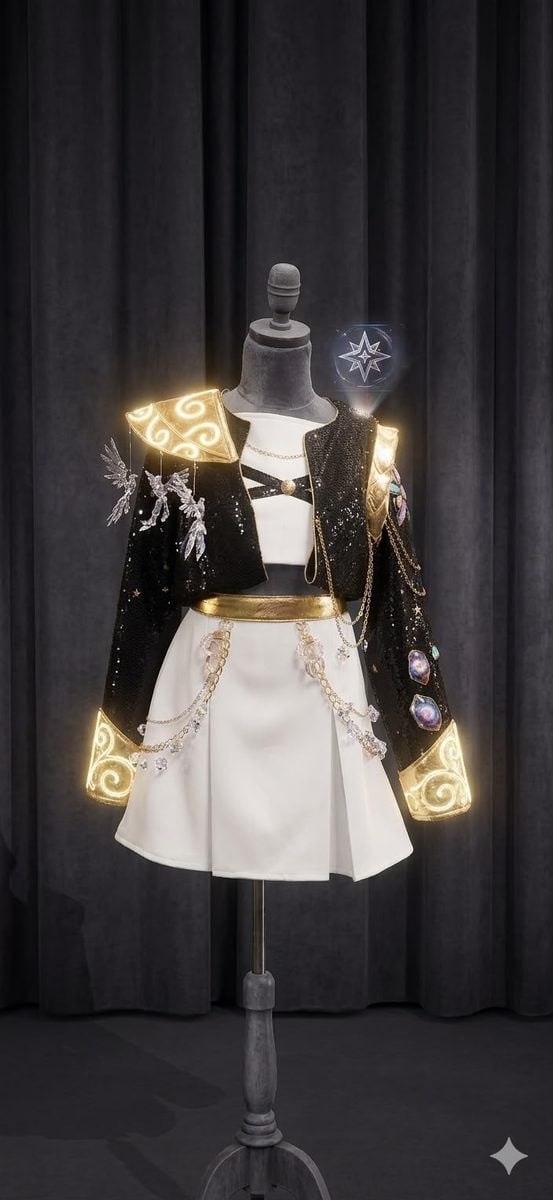
But here is the part nobody really talks about. An AI image is only an idea. It doesn’t know how fabric behaves. It has no idea what a needle can actually do. A picture can show you a shape that looks stunning on a screen and is simply impossible to build in real cloth.
That gap, between a beautiful image and something a child can actually wear, is still very much a human job.
Back to the girl from Bangalore
She wanted the K-Pop Demon Hunters “Rumi” costume for her birthday. The golden sequinned stage look, with the structured shoulder piece.
What stayed with me was the very first thing she said. She told us, “I am 11 years old and I want to try if I can get an outfit designed and made the way I want.” That was it. Not her mother asking on her behalf. Her, wanting to find out for herself whether she could do this.
And she had already used AI to make an image of what she wanted. I have to say, she used it really well. She knew her own taste completely, and the picture showed it clearly.
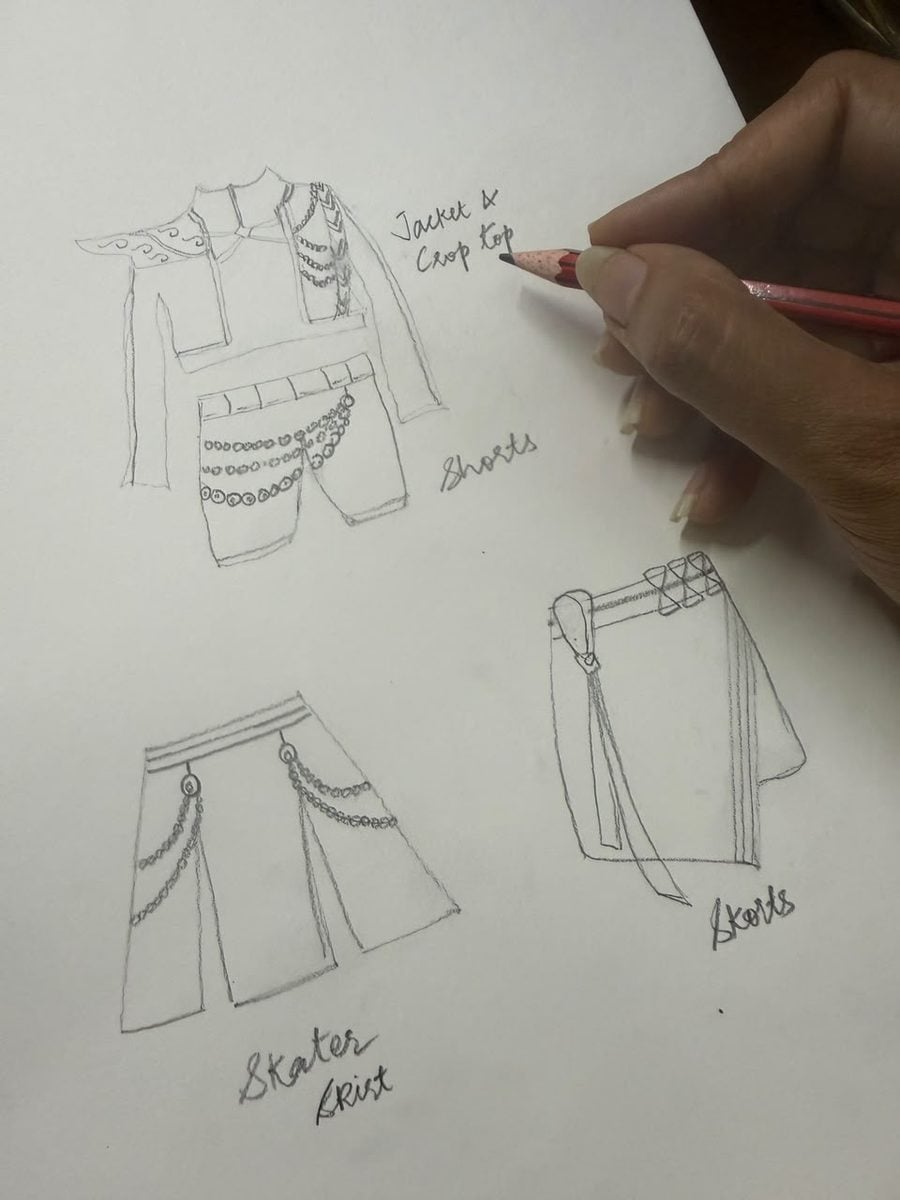
The problem was that picture could not be stitched. The armour shape she had picked just isn’t possible to make in fabric, and the handwork she imagined on it couldn’t be done by hand the way the image was showing it. The cloth would never hold that form.
So I told her the truth. I said this version is not something we can actually make, and I explained why.
She didn’t give up. She went away, made a fresh image, and we got on a call to talk it through. We spent about two days going back and forth on that one dress. Her idea, then our experience, then her idea again, until we reached something that was true to what she had pictured, that we could actually build, comfortable for her, and right for a girl her age. The final costume was completely hers.
The skirt was a good example of how that works. She wanted gold chain detailing running down one side, a wrap-over front and a contrast sash at the waist. We built it exactly to that, but in a fabric that would actually hold its shape on a child who wants to move and dance in it.
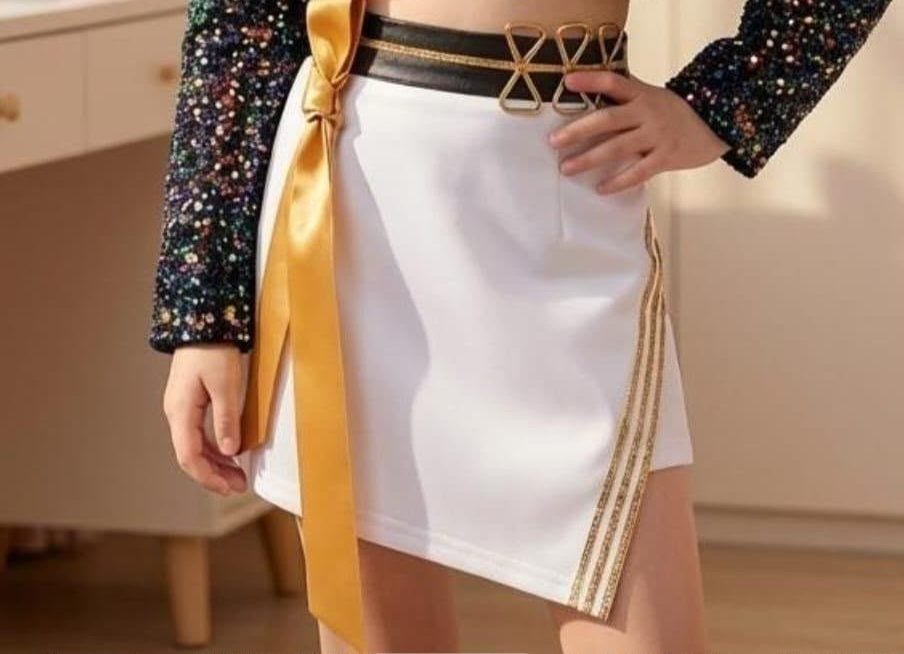
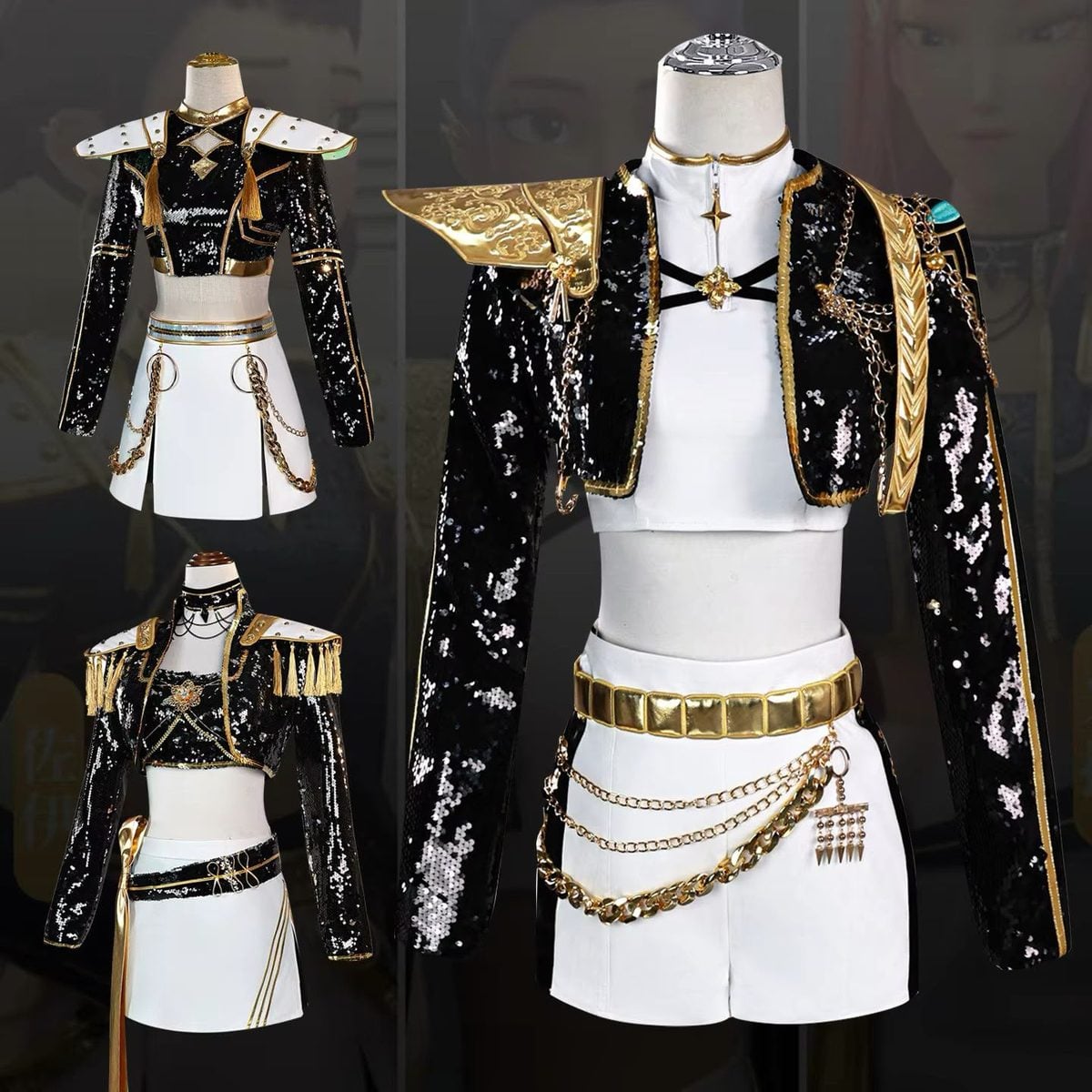
She used AI to start the conversation. We used 23 years of stitching to finish it.
How a custom order actually works at Pink Blue India
People often ask how a made-to-order outfit even comes together when the customer is in one city and we are in another. Here is how we do it.
- First chat on phone and WhatsApp. We get the occasion, a rough budget, and the basic idea. If there is an AI image or a reference photo, this is where it reaches us.
- A video call to really understand the requirement. This step matters more than ever now. When someone shows up with a polished AI picture, our most useful job is often to gently tell them what is possible and what isn’t, before a single piece of fabric is cut.
- Sketch and final design. Our designer turns the idea into something that can genuinely be built.
- Stitching and fittings. The piece is handmade, with adjustments along the way.
- One last video call before we ship. The customer sees the finished outfit before it leaves us. Nothing unexpected ever shows up at the door.
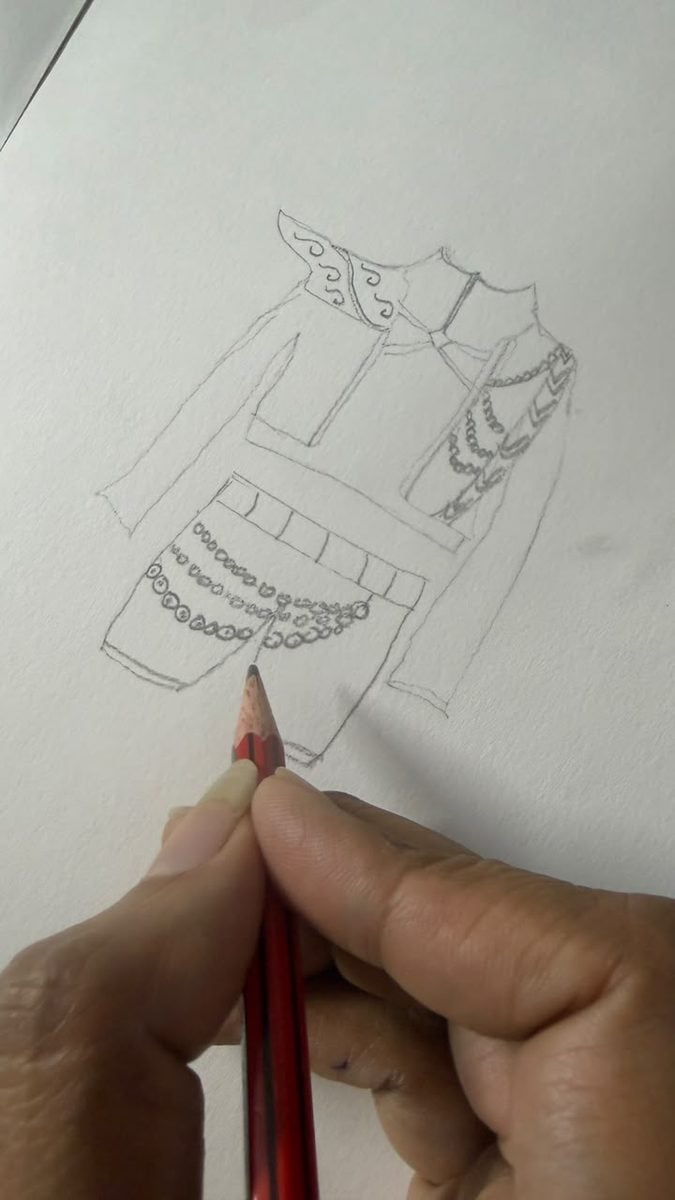
What AI is really changing
I don’t think AI is going to put designers out of work. If anything, it has given people a new way to talk to us. A child who could never draw is now able to show me exactly what is in her head, and that is a genuinely lovely thing.
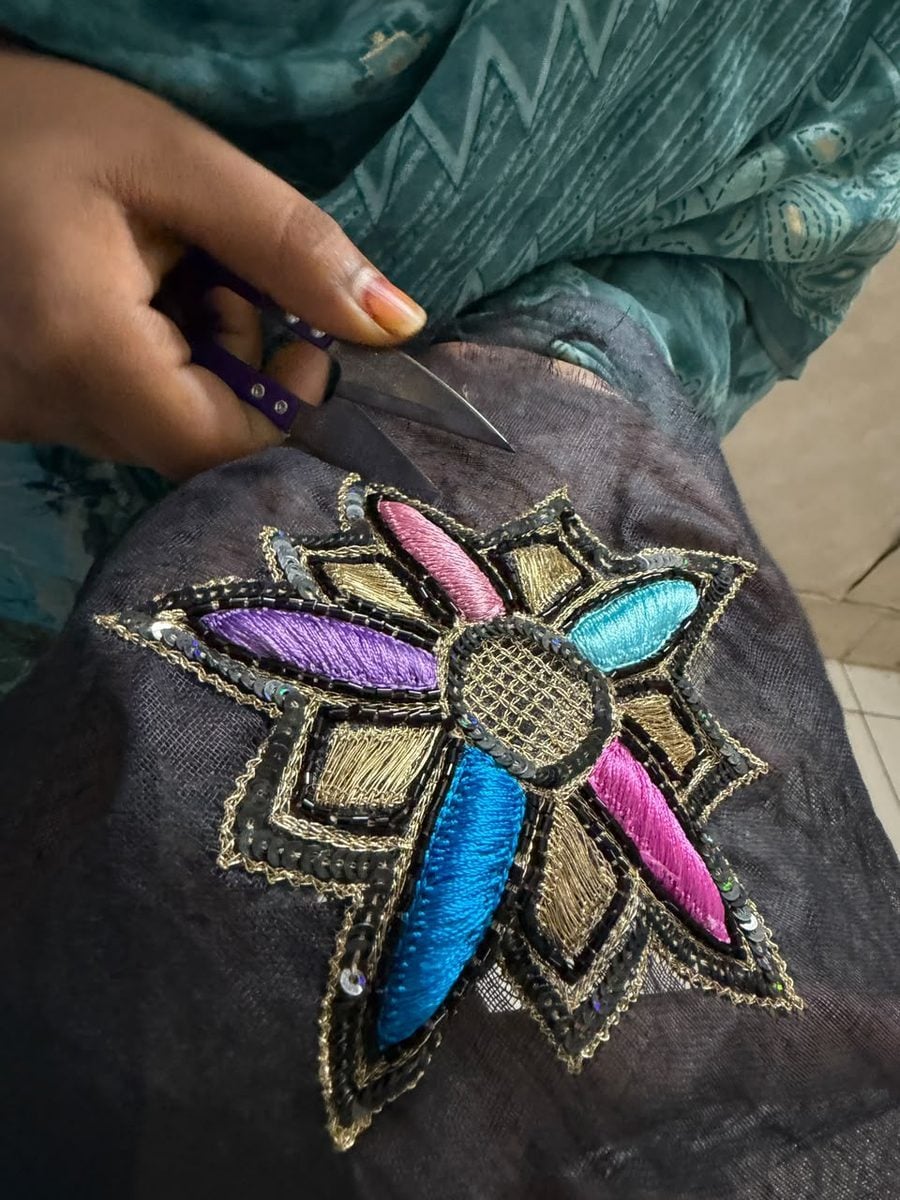
Look closely at a single appliqué patch like this one. Every petal is silk thread wound by hand, then outlined in tiny beads and sequins, one stitch at a time. It takes our artisans hours. A machine can’t improvise the way those colours catch the light, and AI has no idea how much patience sits inside one small flower. This is the soul of the garment, and it is made entirely by hand.
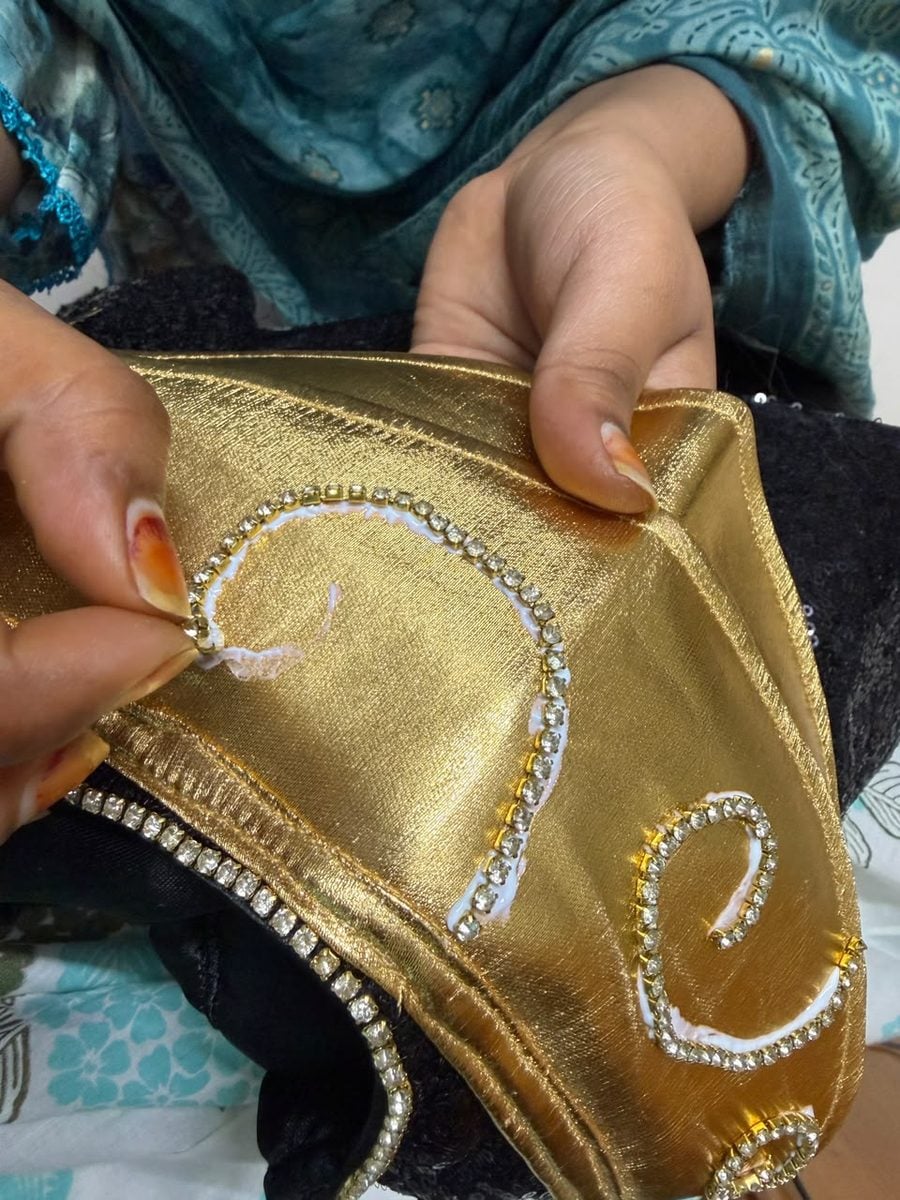
But it hasn’t replaced the parts that make an outfit good. Knowing the child who will wear it. Knowing how cloth actually moves. Knowing what is right for an 11-year-old. Caring whether she lights up when she finally puts it on. AI can make the picture. The rest is still ours to do.
If your child has a dream outfit in her head, whether she says it out loud or turns up with an AI image she made herself, we would love to help bring it to life. You can see our K-Pop Demon Hunters Rumi costume here, or message us on WhatsApp to start your own design.
Written by Aastha Agarwal, lead designer at Pink Blue India, with 23 years of experience and more than 50,000 custom outfits designed. Pink Blue India has been handcrafting custom children’s wear since 2013.
Looking for custom kids outfits?
Pink Blue India has been designing children's clothing since 2013. 50,000+ outfits delivered across India.
Shop Pink Blue India WhatsApp Us